


Electronic Music Festivals: Origins, Evolution and the Biggest Events in Europe (2026 Guide)
Electronic music festivals are now among the most influential cultural events in Europe. What was once a marginal, underground practice has evolved into a global system of production, attracting millions of people each year. Massive stages, immersive sound systems, visual architectures and international audiences define today’s landscape — where music is no longer just heard, but spatially experienced.
Yet this phenomenon did not emerge overnight.
The scale, structure and cultural significance of contemporary festivals are the result of a long historical transformation. Electronic music did not begin in open-air events or large crowds, but in controlled environments — radio studios, research laboratories and experimental spaces where sound was treated as material rather than performance.
Over time, these ideas moved outward. What began as technical experimentation gradually entered clubs, where repetition, rhythm and collective listening reshaped social experience.
From there, electronic music expanded into public space, transforming streets, warehouses and eventually entire cities into temporary environments of sound and movement. To understand modern festivals, therefore, is not simply to look at events — but to understand a process.
A shift:
from studio to club,
from club to city,
from sound to environment.
Electronic music festivals are the final stage of this evolution — where technology, architecture and collective experience converge into a single designed system.

The Origins of Electronic Music Festivals
Electronic music did not begin in festivals — it began in laboratories and radio studios.
In the 1940s and 1950s, composers like Pierre Schaeffer were experimenting with recorded sound. These early works were presented in controlled environments such as research institutions and avant-garde performances, not mass gatherings. The transition toward festivals started much later.
1970s–1980s: From Experimental Music to Live Electronic Performance
The rise of bands like Kraftwerk transformed electronic sound into something performative and accessible.
At the same time:
Synthesizers became more portable
Amplification systems improved
Audiences grew beyond academic circles
Electronic music began appearing in multi-genre festivals, rather than having dedicated events.
1990s: The Birth of Electronic Music Festivals
The real turning point came in the 1990s with rave culture and club expansion across Europe.

Key milestones:
Love Parade (Berlin, 1989–2010)
One of the first massive public electronic events, turning techno into a cultural movement.
Sónar Festival (1994)
Combined music, technology and digital art — redefining what a festival could be.
Creamfields (1998)
Helped establish the modern outdoor dance festival format.
These events shifted electronic music:
→ from clubs
→ to large-scale open environments
→ with curated lineups and production design
2000s–Today: Global Expansion of Electronic Festivals
By the 2000s, electronic music festivals became global phenomena.
Key developments:
Large-scale stage architecture
International DJ culture
Festival tourism
Branding and immersive storytelling
Festivals are no longer just music events — they are designed environments combining sound, architecture, visuals and identity.
The Most Famous Electronic Music Festivals in Europe (2026)
Below is a curated list of the most influential festivals, with brief descriptions, 2026 dates and official websites.
🇧🇪 Tomorrowland
Location: Boom, Belgium
Dates 2026: July 17–19 & July 24–26 (expected)
About: The most iconic EDM festival in the world. Known for fantasy-inspired stage design and massive global audience.

🇪🇸 Sónar Festival
Location: Barcelona, Spain
Dates 2026: June 18–20 (expected)
About: Blends electronic music, digital culture and innovation. Strong focus on experimental sound and creative technology.

🇭🇷 Ultra Europe
Location: Split, Croatia
Dates 2026: July 10–12 (expected)
About: European edition of Ultra, focused on big-room EDM and global headliners.

🇳🇱 Awakenings Festival
Location: Netherlands
Dates 2026: June 27–28 (expected)
About: One of the most important techno festivals in the world, focused on pure sound and industrial aesthetics.

🇩🇪 Time Warp
Location: Mannheim, Germany
Dates 2026: April 11 (expected)
About: Legendary indoor techno event known for sound quality and minimal visual design.

🇭🇺 Sziget Festival
Location: Budapest, Hungary
Dates 2026: August 10–15 (expected)
About: Multi-genre festival with a strong electronic lineup and massive international audience.

🇬🇧 Creamfields
Location: United Kingdom
Dates 2026: August 27–30 (expected)
About: One of the longest-running electronic festivals, bridging mainstream EDM and underground scenes.
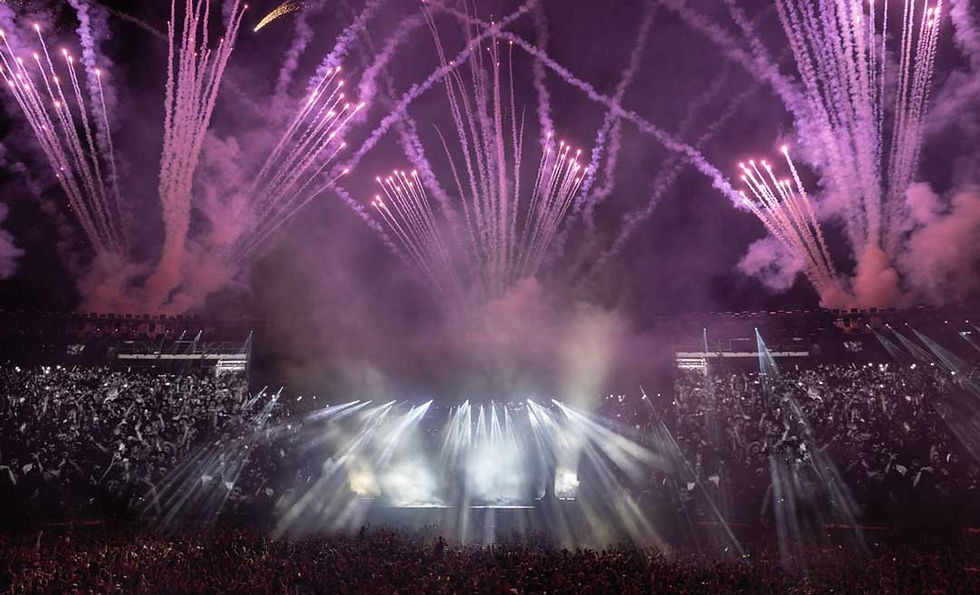
Electronic Music Festivals Today
Electronic festivals are not just entertainment events — they are temporary cities of sound and design.
They combine:
Architecture (stage design)
Technology (sound systems, lighting)
Identity (branding, visuals)
Collective experience (crowd + rhythm)
From early experimental sound labs to massive festivals like Tomorrowland, electronic music has evolved into a global cultural system. Electronic music festivals represent the final transformation of a long historical process:
laboratory → studio → club → festival
What began as controlled experimentation is now experienced collectively by millions.
Yet the core idea remains the same: sound is not just performed — it is designed, constructed and shared.
Written by Otávio Santiago, a designer dedicated to translating ideas into visual rhythm. His work spans motion, 3D, and graphic design — connecting creativity, technology, and human emotion.




This 2026 guide is fantastic! It really captures how these festivals have evolved from underground raves into massive, high-tech cultural phenomena. The scale of events like Tomorrowland is honestly mind-blowing. I couldn't help but think about the tech behind the visuals and sound. Modern festival stages rely on incredibly dense, high-speed processing power, much of which is driven by the efficiency of a BGA package in the underlying controller hardware. It’s wild how integrated circuits—using that same reliable BGA package design—help power the light shows that keep us dancing all night. Truly an awesome era for music and tech!
I love exploring unique sounds through https://besteventseurope.com/en/catalog/all-countries/all-cities/concerts?subgenre=sub-music. This section is great for finding alternative acts and indie performances that you might not see on mainstream platforms. It's a goldmine for true music lovers seeking something different.