


A Visual History of Graphic Design: From Ancient Symbols to the Digital Age
How thousands of years of writing, image-making, typography and technology shaped the visual language of the modern world. Graphic design existed long before anyone thought to call it graphic design. Its history begins not with the invention of the printing press, the establishment of modern design schools or the emergence of the graphic designer as a recognised profession, but with a much older human desire to organise information, communicate ideas and give visible form to the world.
From the first systems of writing and the monumental inscriptions of ancient civilisations to illuminated manuscripts, Renaissance typography, modernist posters and contemporary digital interfaces, the history of graphic design is inseparable from the history of culture itself, reflecting the ways societies have developed technologies, established authority, circulated knowledge and constructed their own identities.
What we now recognise as graphic design emerged gradually from practices that were once distributed across writing, illustration, architecture, printing, craft, advertising and the visual arts. An Egyptian scribe, a medieval manuscript illuminator, a Renaissance printer and a twentieth-century art director would not necessarily have understood themselves as belonging to the same profession, yet their work was connected by a fundamental concern with the relationship between image, language, material and communication.
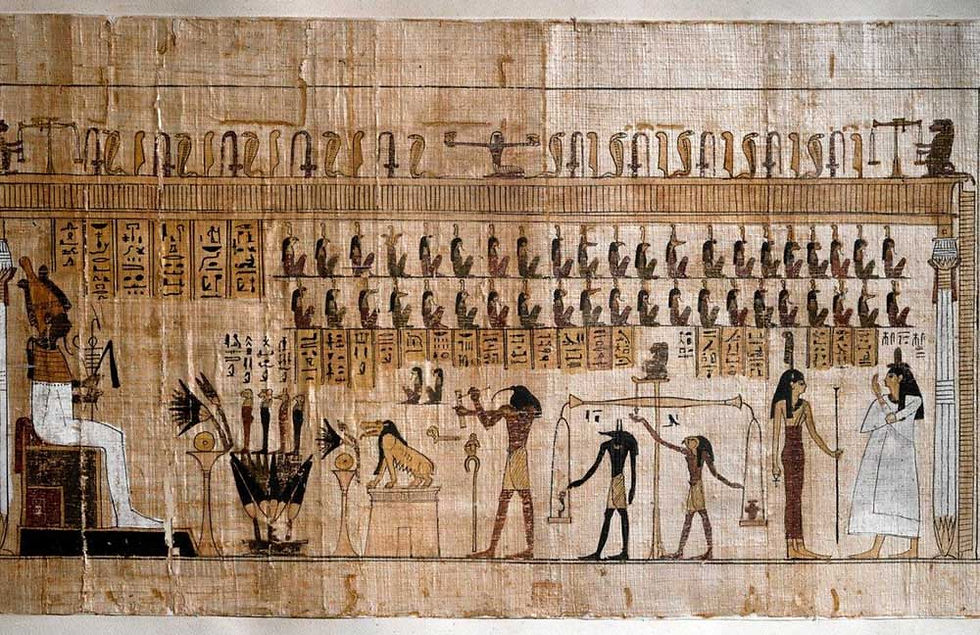
Each operated within the technological possibilities and cultural expectations of their time, making decisions about hierarchy, composition, symbols, reproduction and visual meaning that continue to inform the work of designers today.
The development of graphic design is therefore more complicated than a succession of artistic styles. Its history is also one of changing production systems, from marks carved into stone to movable type, lithography, photography, mechanical reproduction, desktop publishing and computational design. Every major technological transformation altered not only how images and texts could be produced but also who could produce them, how widely they could circulate and what kinds of visual languages became possible.
Before Graphic Design Had a Name
The earliest chapters of graphic design history belong to societies that developed sophisticated systems of visual communication long before the existence of printing, mass media or professional designers. In Mesopotamia, the emergence of cuneiform writing during the late fourth millennium BCE transformed administrative marks into increasingly complex systems for recording language, while ancient Egyptian culture developed an elaborate relationship between hieroglyphic writing, illustration, religious symbolism and architectural inscription.

These systems were never simply decorative additions to communication. Their forms reflected the institutions responsible for producing them, the materials on which they appeared and the social relationships through which information circulated. Writing could establish legal authority, preserve religious knowledge, record commercial transactions or communicate political power, while its visual organisation helped determine how information was understood and by whom it could be accessed.
The development of alphabets and subsequent traditions of manuscript writing introduced further transformations, gradually establishing conventions of letterform, spacing, sequence and textual organisation that would influence typography for centuries. Roman inscriptions, for example, developed monumental capital-letter forms whose proportions remain influential in contemporary type design, demonstrating how visual decisions made for stone architecture could eventually become part of the vocabulary of printed and digital communication.
Looking at these early systems through the perspective of graphic design does not mean projecting a modern profession backwards into antiquity. It means recognising that the fundamental problems of visual communication — how to make information visible, how to establish hierarchy and how to construct meaning through form — have histories considerably older than the discipline itself.
The Manuscript as a Designed Object
During the medieval period, the manuscript became one of the most sophisticated environments for the integration of text, illustration, ornament and material production. Produced through specialised forms of labour involving scribes, illuminators, parchment makers and bookbinders, manuscripts required an understanding of composition that extended beyond the individual letter toward the organisation of the page as a complete visual system.
Works such as the Book of Kells demonstrate the extraordinary complexity that could emerge from the relationship between writing and ornament, with letterforms expanding into elaborate compositions where language, symbolism and image become almost impossible to separate. Elsewhere, the development of different scripts, ruling systems, marginal illustrations and conventions of textual hierarchy established practical solutions to the problem of organising increasingly complex written material.
The medieval book also reminds us that graphic design history cannot be separated from the physical conditions of production. Manuscripts were expensive objects whose creation demanded time, materials and specialist knowledge, while their circulation was limited by the fact that each copy had to be produced individually.
The relationship between visual complexity and reproduction would change dramatically with the development of printing technologies, but many of the principles governing the organisation of text and image had already been explored through manuscript culture.
Gutenberg and the Transformation of Visual Communication
The development of movable metal type printing in fifteenth-century Europe transformed the conditions under which written information could be reproduced, creating new possibilities for the circulation of books, religious texts, scientific knowledge and commercial communication. Johannes Gutenberg's work in Mainz during the 1440s and 1450s was particularly influential because it brought together movable metal type, printing equipment, suitable inks and production methods into a system capable of reproducing substantial texts with a consistency and efficiency that manuscript copying could not match.

Printing itself was not a uniquely European invention, since woodblock printing and movable-type technologies had developed centuries earlier in East Asia. Gutenberg's historical importance lies in the particular system he established within the European context and the consequences it had for the expansion of print culture across the continent.
From a design perspective, the printing revolution changed the relationship between visual form and reproducibility. Letterforms became repeatable components, pages could be assembled through systematic arrangements of type, and printers increasingly developed conventions for titles, margins, illustrations and textual hierarchy that made printed communication recognisable as a distinct medium.
The printed page gradually became a space in which technological precision and visual judgement operated together, establishing foundations for typography and editorial design that remain central to contemporary graphic communication.
Renaissance Typography and the Architecture of the Printed Page
As printing expanded across Europe, Renaissance humanism and renewed interest in classical antiquity helped transform the appearance of the printed book. Printers and type designers developed letterforms influenced by humanist handwriting and Roman inscriptions, while new approaches to page composition brought typography into closer conversation with proportion, geometry, illustration and the intellectual culture of the period.
Figures such as Nicolas Jenson and Aldus Manutius contributed to the development of typographic forms and publishing practices that would influence European book design for centuries, while the work of artists including Albrecht Dürer demonstrated how geometry and mathematical construction could be applied to the representation of letterforms and visual systems.
The Renaissance book was therefore more than a container for written knowledge. Its design participated in the cultural ambition to organise, classify and circulate information, reflecting a society increasingly interested in the relationship between visual order and intellectual understanding.
Many contemporary assumptions about typography — the proportions of roman letters, the relationship between text and margins, and the idea that a page should possess an underlying visual structure — developed through this period, even as later designers repeatedly challenged and reinterpreted them.
From the Industrial Revolution to Modern Graphic Design
The Industrial Revolution introduced another fundamental transformation by accelerating the production and distribution of printed material while expanding the commercial demand for advertising, packaging, newspapers, posters and illustrated publications.

Developments in printing technology, including lithography and chromolithography, allowed images and typography to circulate at scales that had previously been difficult or prohibitively expensive, contributing to the emergence of an increasingly saturated urban visual environment.
The nineteenth-century city became a place where commercial messages competed for attention through scale, colour, illustration and typographic variety, while industrial production created new relationships between manufacturers, consumers and the visual identities of products. Posters became prominent features of public space, packaging developed increasingly recognisable commercial languages, and printed advertising began to shape the appearance of everyday life.
At the same time, movements such as Arts and Crafts questioned the consequences of industrial production for design and craftsmanship. William Morris and the Kelmscott Press sought to reconnect the printed book with traditions of material quality and integrated visual composition, creating an influential counterpoint to the commercial expansion of mass-produced graphics.
The tension between industrial efficiency and artistic control would become one of the central questions of modern graphic design, shaping the emergence of professional design practice during the following century.
The Twentieth Century: When Graphic Design Became Modern
The twentieth century brought an unprecedented concentration of political, technological and artistic transformations, creating conditions in which graphic design began to establish itself as a recognisable modern discipline. The expansion of industrial production, the growth of advertising, the development of photography and the emergence of mass communication coincided with artistic movements that challenged inherited conventions of representation, producing new relationships between typography, image, geometry and social purpose.
During the early decades of the century, movements including Futurism, Dada, Constructivism, De Stijl and the Bauhaus explored the possibilities of visual communication through experimentation with composition, abstraction, photomontage and typographic form.

These approaches were shaped by different political and artistic ambitions, yet they shared an interest in reconsidering how visual language could respond to the conditions of modern industrial society. The development of modernist graphic design was neither uniform nor inevitable. Some designers pursued clarity, standardisation and systematic organisation, while others embraced fragmentation, expressive typography and visual experimentation, establishing a tension between order and disruption that would continue throughout the century.
By the postwar period, graphic design had become increasingly integrated into corporate identity, public information, publishing, transportation and cultural communication. The International Typographic Style, associated particularly with Swiss design, promoted systematic grids, sans-serif typography and carefully organised visual hierarchy, while the expansion of advertising and television introduced new relationships between design, mass culture and commercial persuasion.
The history of graphic design during this period cannot be understood solely through individual movements because each decade produced its own responses to changing technologies and cultural conditions.
From the experimental typography of the 1920s to the political graphics of the 1930s, wartime information design, postwar modernism and the psychedelic visual culture of the 1960s, graphic communication became an increasingly important means through which societies represented their ambitions, conflicts and identities.
From Punk to Postmodernism: Graphic Design After Modernism
By the 1970s, the modernist ambition to establish universal principles of visual communication was increasingly challenged by designers and cultural movements interested in expression, historical reference, political confrontation and the instability of meaning. Punk graphics rejected professional polish through photocopying, collage, improvised typography and appropriation, while experimental designers working within established institutions began questioning the apparent neutrality of grids, typographic systems and modernist visual conventions.
The resulting transformation was not simply a rejection of modernism but a reconsideration of the cultural assumptions behind it. Graphic design could communicate through disorder as well as order, through historical quotation as well as abstraction, and through visual ambiguity as well as clarity, expanding the possibilities of a discipline that had often defined its authority through rational organisation.
During the 1980s, these developments intersected with music television, fashion publishing, independent magazines and the early arrival of digital production technologies. Designers such as Neville Brody, April Greiman and Wolfgang Weingart contributed to different forms of experimentation that challenged the relationship between typography, image and composition, while the growing influence of computers began to alter the practical conditions of graphic production.
The visual language of this period would become particularly important to electronic music, club culture and the emergence of cyberpunk, where technological imagery, corporate symbols, experimental typography and underground publishing increasingly shared a common cultural environment.
The Digital Revolution and the Graphic Design of the 1990s
The arrival of personal computers and desktop publishing fundamentally changed the relationship between designers and the tools of visual production. During the 1980s, software for page layout, digital illustration and type design had begun challenging established production processes, but it was during the 1990s that these technologies became deeply embedded in professional graphic design, allowing individual designers and smaller studios to undertake work that had previously depended on specialised typesetting, photographic and prepress facilities.
The transformation was not limited to efficiency, because digital production also changed the aesthetic possibilities of the medium. Typography could be distorted, layered, fragmented and manipulated with an immediacy that encouraged experimentation, while images could be assembled and recomposed through processes that blurred the boundaries between photography, illustration and graphic construction.
Publications such as Emigre and Ray Gun became associated with different approaches to this changing environment, demonstrating how new technologies could generate visual languages that challenged established assumptions about legibility, authorship and professional refinement.
At the same time, electronic music, video games and club culture were creating particularly fertile environments for graphic experimentation.
Studios such as The Designers Republic developed visual identities that combined fictional corporations, Japanese-inspired commercial imagery, technological interfaces and typographic systems, producing work that appeared to belong to imaginary economies rather than conventional promotional campaigns. Their contributions to electronic record labels and the Wipeout video-game series demonstrated how graphic design could extend across music, interactive environments, packaging and cultural identity.
The 1990s therefore occupy a particularly important position in the history of graphic design because they mark the transition between a discipline primarily associated with printed communication and one increasingly shaped by digital production, electronic media and networked culture. Many of the visual approaches developed during this period continue to influence contemporary design, particularly in the relationship between typography, motion, music and technological identity.
The Internet and the Transformation of Visual Identity
The expansion of the internet introduced a new set of conditions that would gradually transform graphic design from a discipline concerned largely with fixed compositions into one increasingly responsible for systems that needed to function across different screens, devices and forms of interaction. Websites required designers to consider navigation, usability, information architecture and changing content, while the growing importance of digital platforms meant that visual identities could no longer be defined exclusively through stationery, printed advertising or packaging.
During the 2000s, designers increasingly worked across both physical and digital environments, developing identities that could move between websites, campaigns, interfaces and emerging forms of online communication. The widespread adoption of broadband, digital photography and accessible publishing tools also accelerated the circulation of images, allowing visual culture to develop through increasingly international networks of production and exchange.
The following decade intensified these changes as smartphones and social media platforms became central to everyday communication. Brands, artists, institutions and individuals were expected to maintain recognisable identities across constantly changing formats, while responsive interfaces and digital products introduced new expectations around consistency, accessibility and interaction.
The graphic designer's role consequently expanded beyond the creation of individual objects toward the development of flexible visual systems capable of adapting to multiple contexts. Typography, colour, image treatment, motion and interface behaviour increasingly operated as interconnected components, reflecting a cultural environment in which communication had become continuous rather than confined to particular publications or campaigns.
Graphic Design in the Age of Artificial Intelligence
The 2020s have introduced another significant transformation through the rapid development of generative artificial intelligence, increasingly sophisticated creative software and computational systems capable of producing and manipulating visual material. These technologies are changing the conditions of image-making, typography, animation and digital production, while raising questions about authorship, originality, labour and the relationship between human judgement and automated processes.

Yet the emergence of new tools does not necessarily diminish the importance of design thinking. If anything, the growing accessibility of image production makes the ability to establish meaningful relationships between content, context, audience and visual form increasingly significant. Producing an image and developing a coherent visual language remain different activities, particularly when identities must operate across cultural environments whose meanings cannot be reduced to formal consistency alone.
This distinction becomes clearer when contemporary graphic design is considered within its longer history. The introduction of movable type did not eliminate the need for typographic judgement, photography did not make illustration irrelevant, and desktop publishing did not remove the importance of composition or visual hierarchy. Each technology changed the conditions under which design was produced, creating new possibilities while transforming the skills and responsibilities of the people working with it.
Artificial intelligence belongs to this continuing history of technological change, although its long-term consequences remain uncertain. What is already evident is that graphic design continues to evolve beyond individual images toward systems involving interaction, motion, sound, computation and increasingly complex relationships between physical and digital environments.
A History That Continues to Be Designed
Looking across the history of graphic design, from ancient inscriptions and manuscript culture to industrial printing, modernist typography, electronic music and artificial intelligence, the most striking continuity is not the survival of particular styles but the persistence of a fundamental relationship between visual communication and technological change. Every period has developed its own methods for organising information and constructing meaning, yet those methods have always reflected wider transformations in society, culture, economics and the technologies available to designers.
The history of graphic design is consequently not a straightforward movement toward greater simplicity, technical sophistication or visual clarity. It contains repeated tensions between ornament and reduction, individual expression and standardisation, commercial communication and cultural experimentation, while ideas rejected by one generation frequently return under different technological conditions in another.
Contemporary graphic design continues to draw upon this accumulated history, sometimes consciously through historical references and sometimes through conventions that have become so familiar their origins are no longer visible. A digital interface can inherit principles developed through centuries of book typography, a contemporary music identity can borrow from Constructivism or punk, and an experimental typeface can reinterpret letterforms whose proportions were established long before the invention of printing.
Understanding this history is therefore not simply an exercise in identifying influential designers or recognising the visual characteristics of different decades. It provides a way of understanding how images acquire meaning, how technologies influence cultural expression and why the visual systems surrounding us take the forms they do.
A Visual History of Graphic Design follows these developments chronologically, beginning with the earliest systems of visual communication and continuing through the movements, technologies and cultural transformations that shaped the discipline. Each chapter examines a particular period in greater depth, connecting historical objects and influential designers with the wider conditions that made their work possible.
The series begins thousands of years before graphic design existed as a profession, but its subject remains unmistakably contemporary: the ongoing human effort to give information, ideas and culture a visible form.
Written by Otávio Santiago, a multidisciplinary designer exploring the intersection of emotion, form, and technology. His practice spans graphic, motion, and 3D design, bridging digital and physical experiences.



Comments